FUE Hair Transplant in Vancouver
Follicular Unit Excision removes your hair one natural cluster at a time from the back and sides of the scalp and transplants it into the thinning areas on top. No strip incision or linear donor scar. FUE offers an approach to restoring coverage that can suit patients who prefer shorter hairstyles, while leaving small scattered donor scars.
Every graft is part of a bigger plan. Dr. Babak Nouhi personally designs your hairline, performs donor harvesting, and creates the recipient sites—with attention to your facial proportions, donor supply, and long-term goals.
- $5 / graft Cost
- 6–10 hrs Typical procedure time
- 3–7 days Typical time away from work
- 12–18 mo Result assessment
Timing varies with the procedure, individual healing, and occupation.
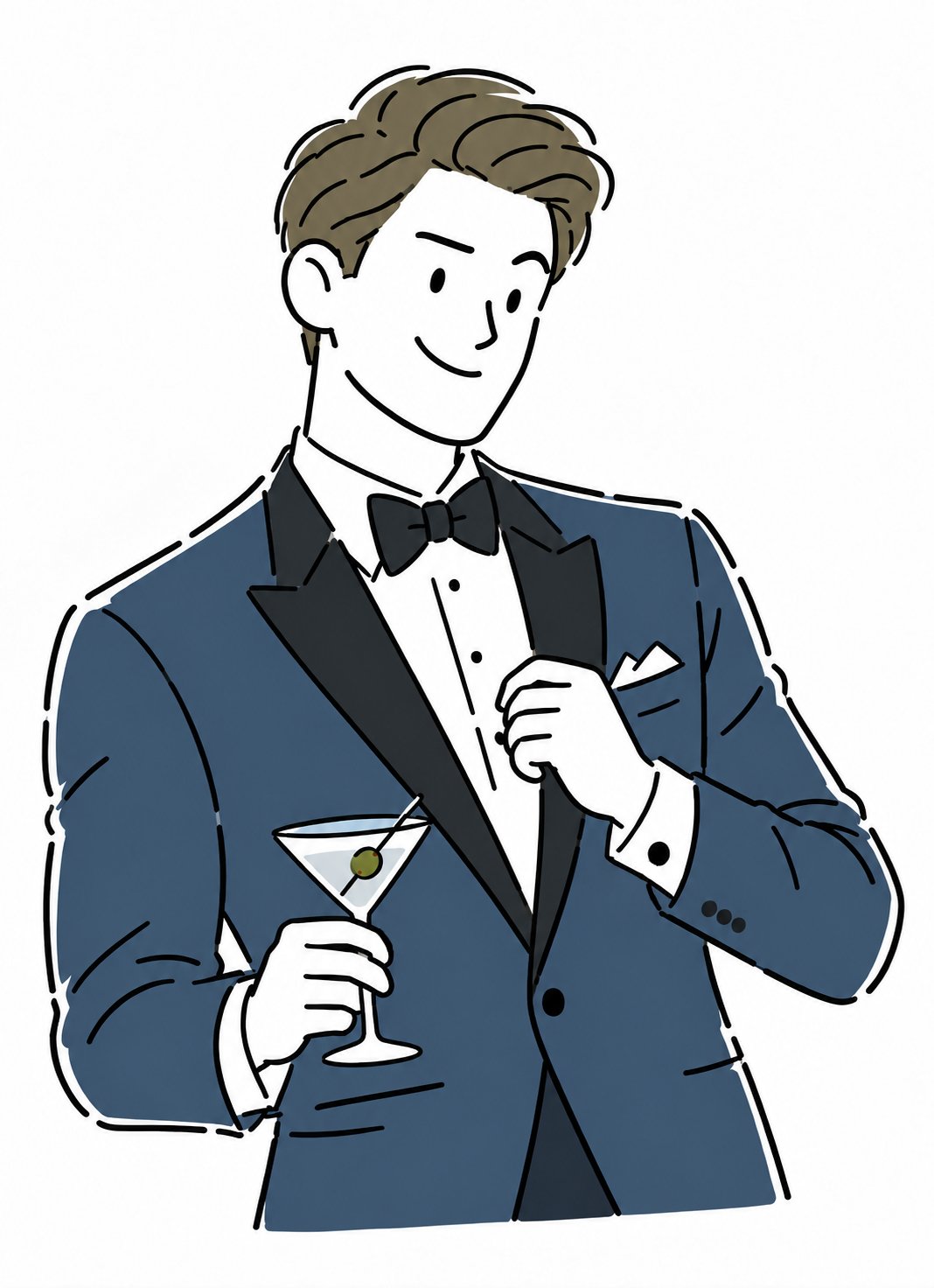
What Is an FUE Hair Transplant?
Follicular units, removed one at a time
FUE stands for Follicular Unit Excision (often still called "extraction"). Hair does not grow as individual strands—it grows in natural clusters of one to four hairs called follicular units. FUE removes those units one at a time from the back and sides of your scalp using a circular punch under a millimetre wide, then transplants them into the thinning areas on top.
The donor zone matters as much as the destination. Hair at the back and sides of the scalp is genetically resistant to DHT, the hormone responsible for pattern hair loss. Transplanted follicles generally retain that resistance, making long-lasting growth possible. Growth and longevity vary, and your existing hair may continue to thin.
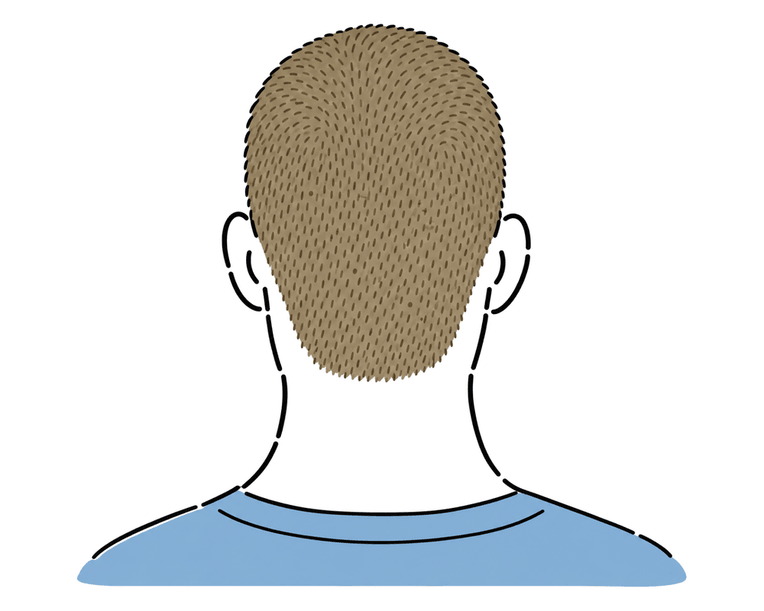
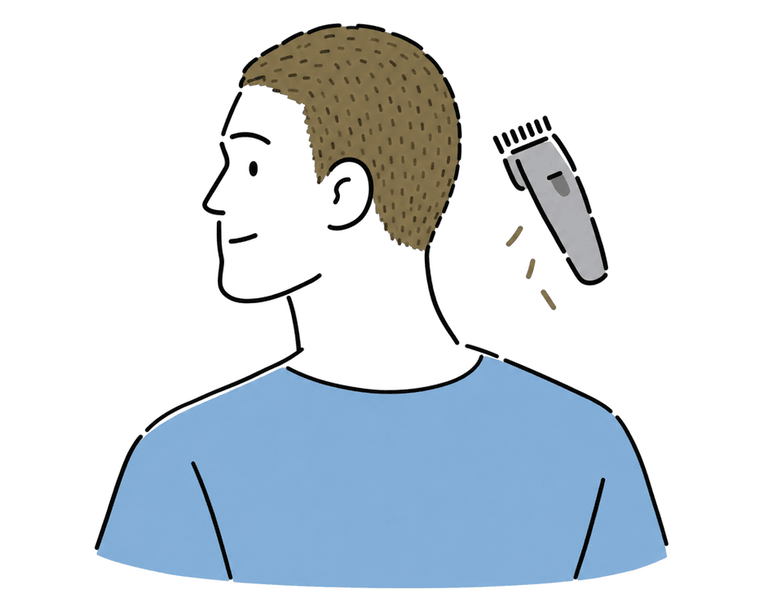
Because each unit is taken individually, FUE leaves no linear incision and no stitched closure—just small scattered donor scars whose visibility depends on healing, hair characteristics, extraction density, and hairstyle.
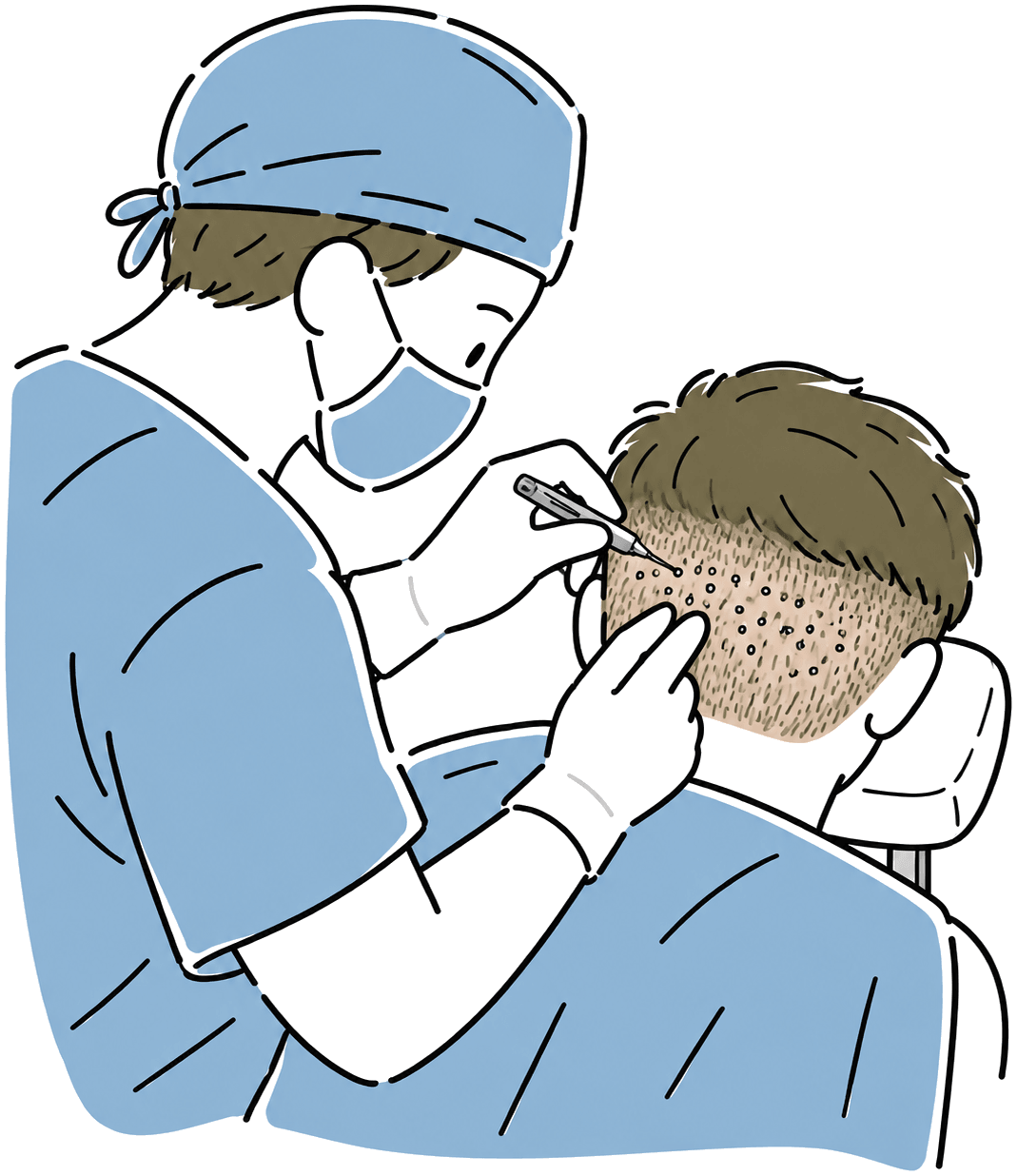
How an FUE Procedure Works
Your procedure brings together personal planning, physician-performed harvesting, and coordinated graft preparation and placement. Dr. Nouhi directs your treatment, with trained team members assisting under his supervision.
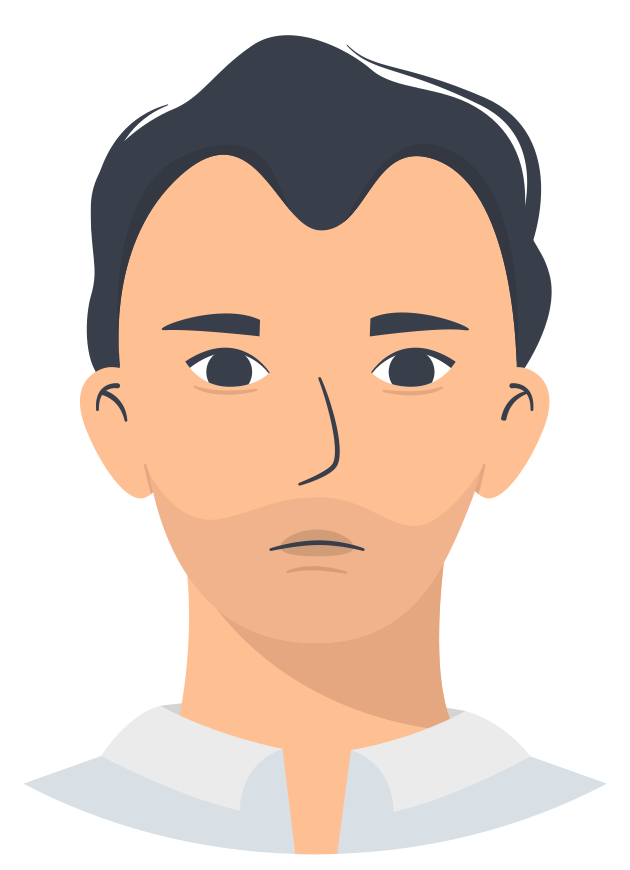
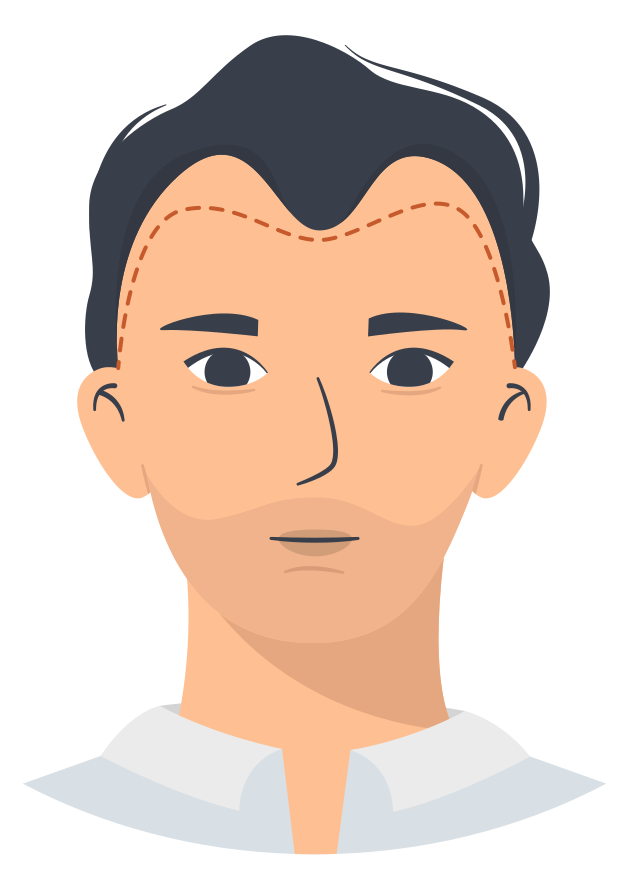
01 Hairline Design & Planning
Before a single graft is moved, Dr. Nouhi draws your hairline by hand and confirms the plan with you in the mirror. Placement accounts for your facial proportions, donor supply, and—critically—how your hair loss may progress, with a design that considers both your current appearance and future treatment needs.
02 Local Anesthesia
The donor and recipient areas are numbed with local anesthesia. You remain awake, and your comfort is monitored throughout. The injections can cause brief discomfort, and additional anesthetic can be given when needed.
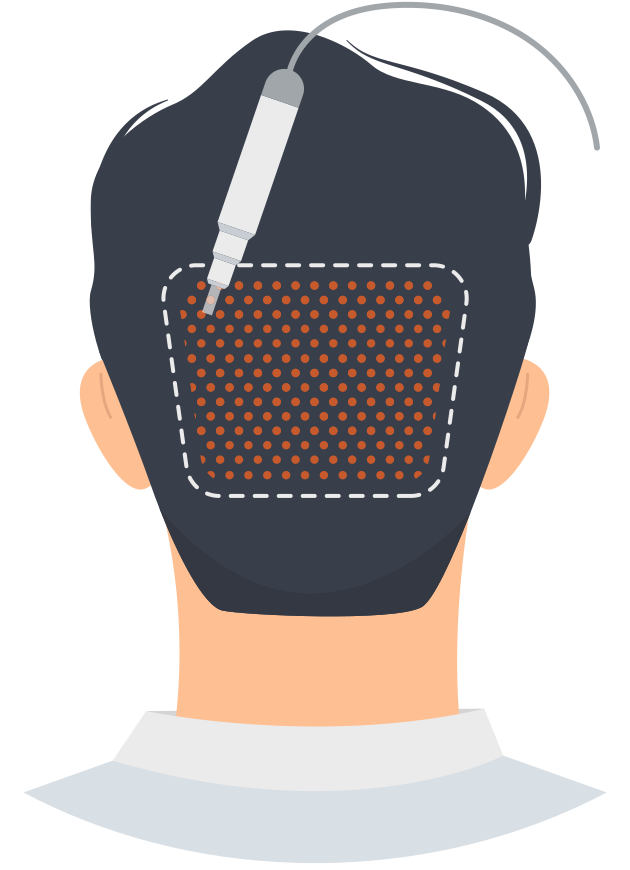
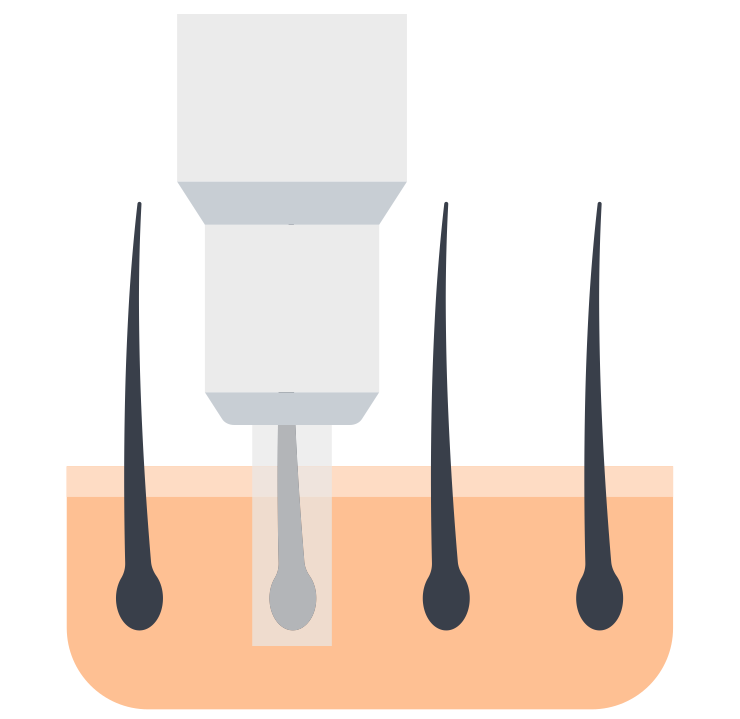
03 Graft Extraction
Follicular units are removed individually from the donor zone with a sub-millimetre punch. Depth, angle and harvest pattern all have to be right: too aggressive and you transect follicles and thin the donor area visibly. Dr. Nouhi performs this step himself.
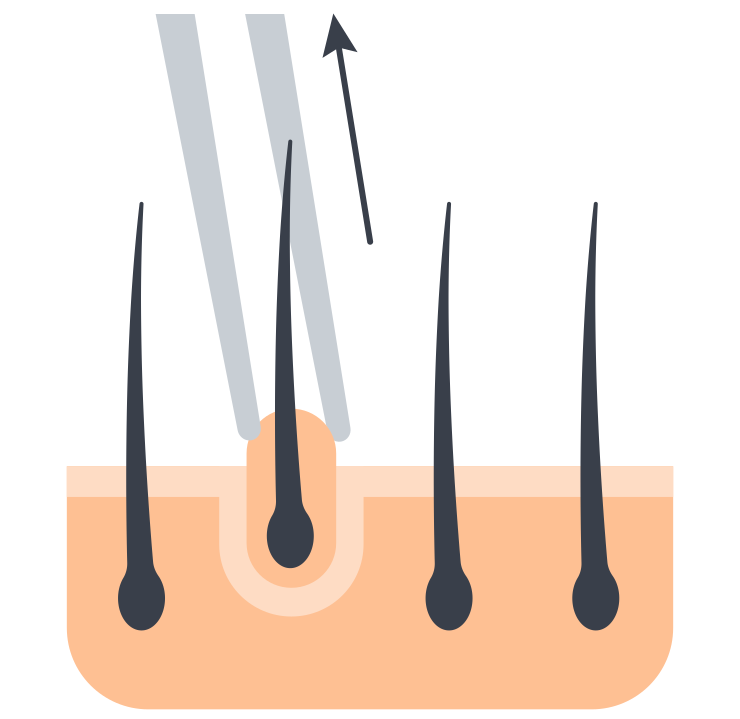
04 Microscopic Sorting & Quality Control
Every graft is inspected under a microscope, sorted by hair count, and kept in chilled holding solution. Grafts are assessed for suitability before placement. Single-hair units are reserved for the hairline; multi-hair units go behind them to build density.
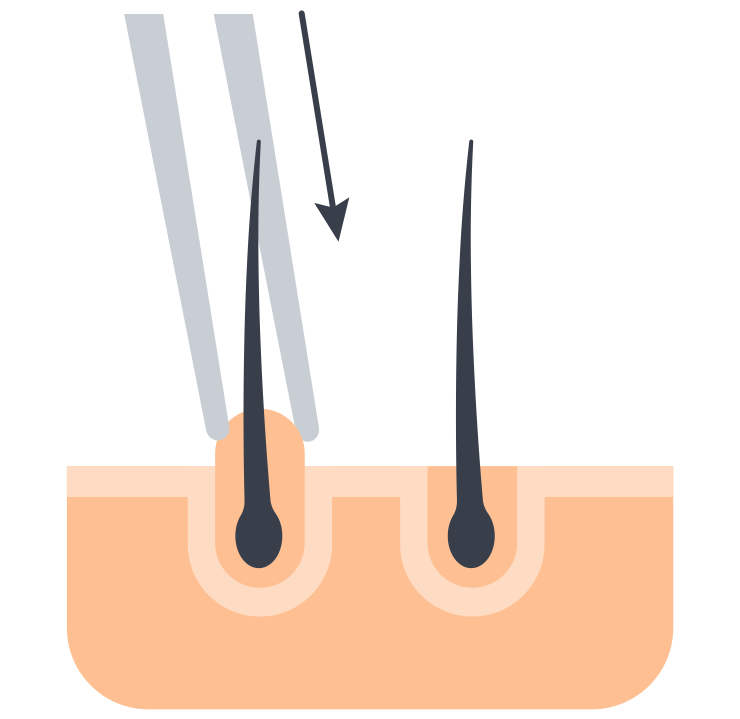
05 Site Creation & Graft Placement
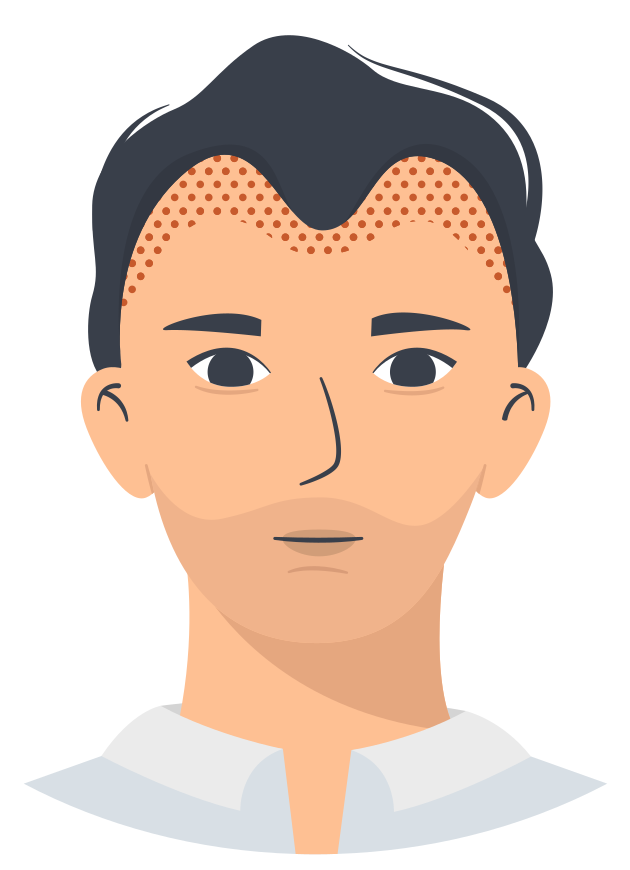
Dr. Nouhi creates the recipient sites, planning their angle, direction, and distribution around your treatment goals. Trained team members assist with graft placement under his supervision. Single-hair grafts help create a soft leading edge, with multi-hair grafts used behind them to contribute coverage.

Your Hairline Takes Shape
New growth often begins around three to four months, with results generally assessed over twelve to eighteen months. Timing and density vary. See the recovery timeline
FUE or FUT?
The Honest Comparison
| Feature | FUE | FUT |
|---|---|---|
Harvesting Method | Individual units, removed by punch | Thin strip, dissected under a microscope |
Scarring | Small scattered scars; visibility varies | Linear scar; width and visibility vary |
Recovery | Small extraction wounds; typically no donor sutures | Donor closure requires wound care and sometimes suture or staple removal |
Graft Yield Per Session | Depends on donor density, extraction limits, and treatment plan | Depends on donor density, scalp laxity, and strip dimensions |
Hair Length Afterwards | Shorter styles may be possible; very short styles can reveal scars or thinning | Longer hair may help conceal the scar; coverage varies |
Donor Shaving | Donor trimming commonly required; extent varies | Donor strip usually trimmed |
Best Suited For | Selected according to donor characteristics, coverage goals, and hairstyle preferences | Selected according to donor characteristics, scalp laxity, coverage goals, and hairstyle preferences |
Cost | $5 per graft | $5 per graft |
Why Patients Choose FUE
No Linear Scar
FUE removes individual follicular units without a strip incision or stitched donor closure. It leaves small scattered scars, which may be visible with very short or shaved hairstyles.
No Donor Sutures
The small extraction sites generally heal without sutures. You receive a personalized aftercare plan and follow-up to monitor your recovery.
Hairline Design With the Future in Mind
Hairline height, shape, and graft distribution are planned around your features, available donor hair, and potential future hair loss.
Planning for Your Preferred Hairstyle
The absence of a linear scar can be an advantage for shorter hairstyles. Dr. Nouhi discusses how small donor scars and density changes may affect the lengths you want to wear.
Your FUE Recovery Timeline
- Days 1–2 Rest at home
Swelling & Careful Sleeping
The scalp feels tight and tender, and some swelling can settle toward the forehead. Sleep with your head elevated and leave the grafts untouched.
- Days 3–7 Washing begins
Crusting & First Gentle Wash
Small crusts form around the grafts as the donor and recipient areas heal. Washing follows your postoperative instructions. Return to work depends on your recovery and job requirements.
- Weeks 2–4 Back to routine
Crusts Clear, Redness Fades
Crusting generally resolves and redness gradually settles, although it can persist longer. Exercise resumes according to your healing and clinical advice.
- Months 1–4 Resting
The Shedding Phase
Most transplanted hairs shed as the follicles rest. It is expected, and the follicles stay in place beneath the skin.
- Months 4–8 Growing
New Growth Appears
New hairs may emerge and gradually thicken. The pace and extent of growth vary between patients and treatment areas.
- Months 12–18 Final result
Assessing Growth & Coverage
Growth, texture, and coverage are assessed as the result matures. Graft survival and density vary, and some patients may consider further treatment.
FUE Hair Transplant Cost in Vancouver
FUE costs $5 per graft, the same rate as FUT. You receive a written quote outlining your proposed treatment and included services before deciding.
Your recommended graft count reflects your donor supply, treatment area, hair characteristics, and coverage goals. Dr. Nouhi considers both the planned procedure and how future hair loss could affect your options.
Cosmetic FUE transplantation is privately paid and is not covered by MSP.
Meet With Dr. NouhiEstimate Your Cost
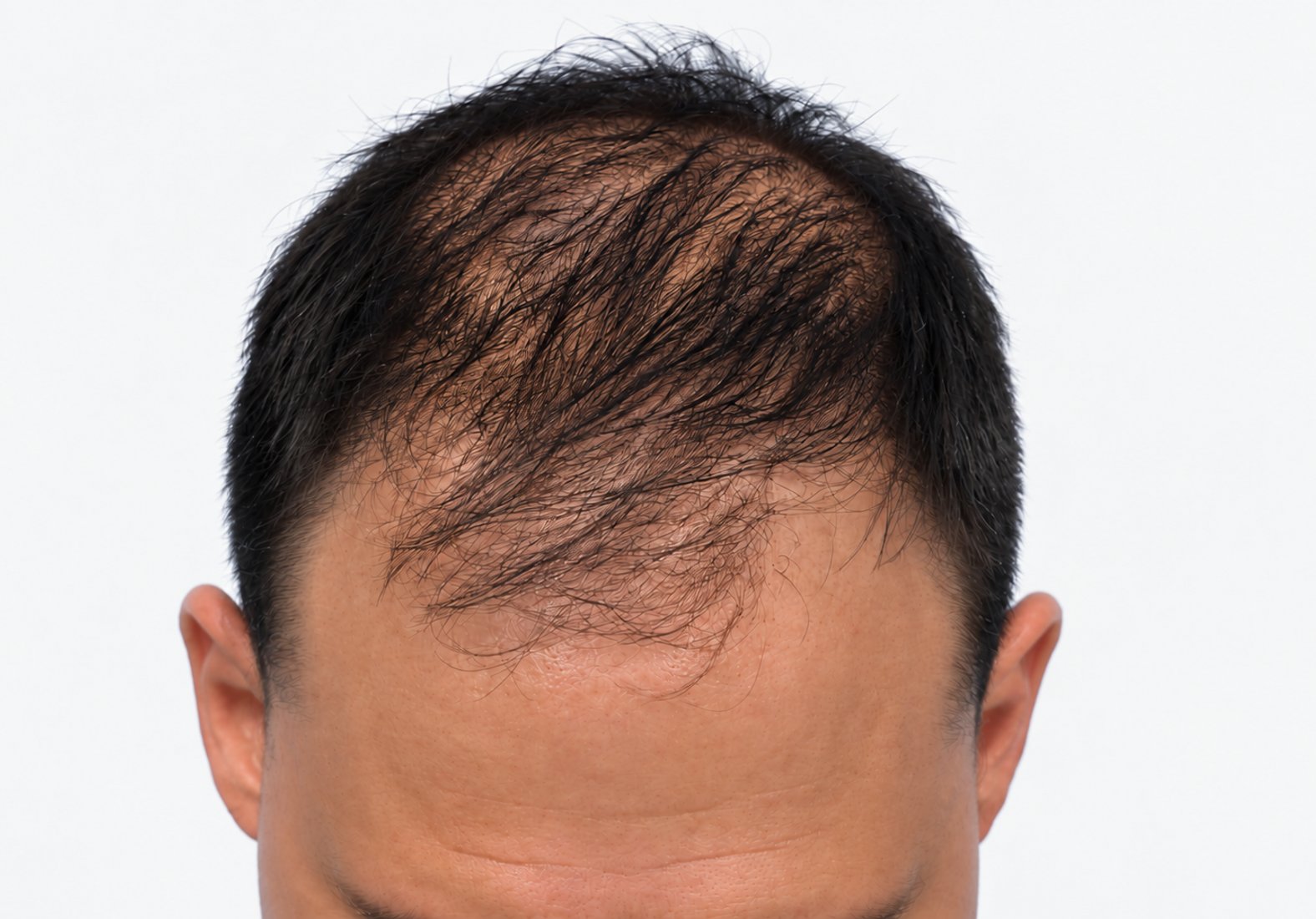
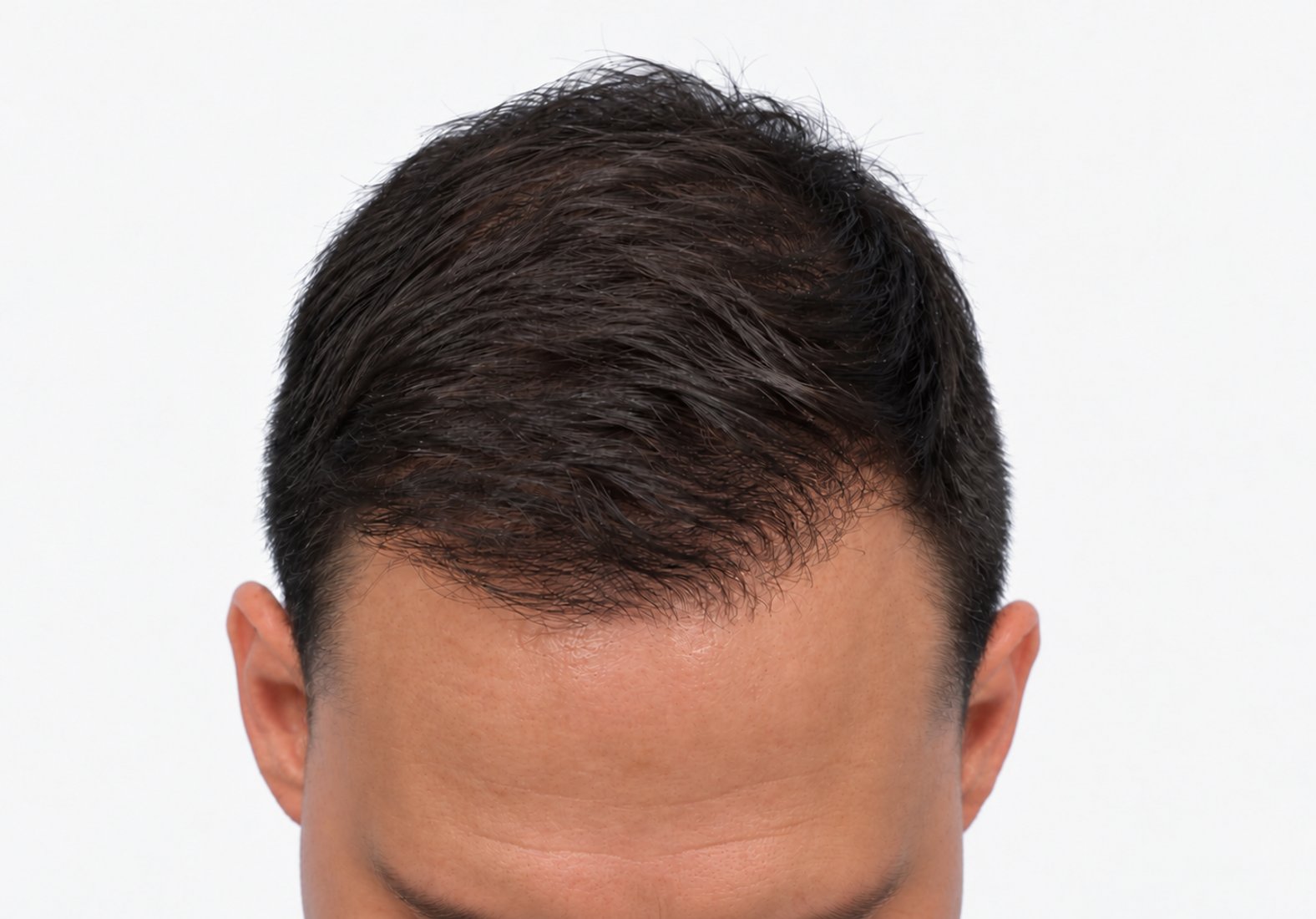
Illustrative example Norwood 4 hair loss
At $5 per graft. This is an estimate only. Hair-loss appearance alone does not determine your graft requirements. Your treatment recommendation and written quote follow an individual assessment.
FUE Hair Transplant FAQs
FUE can provide long-lasting hair restoration. Donor follicles are selected from areas that are generally more resistant to pattern hair loss and usually retain that characteristic after transplantation. However, growth and longevity vary, and your existing, non-transplanted hair may continue to thin. Dr. Nouhi considers these changes when planning your hairline and discussing whether ongoing medical treatment could help maintain your overall appearance.
FUE may be suitable if you have adequate donor hair, an appropriate diagnosis, and realistic expectations about coverage and density. It can be considered for hairline restoration, other areas of thinning, and patients who prefer shorter hairstyles, although small donor scars may still be visible. Dr. Nouhi assesses your pattern of loss, donor quality, and likely future needs before recommending an approach.
FUE leaves small scars at the extraction sites and permanently reduces hair density in the harvested areas. Careful planning is needed to limit visible thinning and preserve options for future procedures. Donor trimming is commonly required, and larger procedures can take considerable time. As with any hair transplant, possible risks include infection, altered sensation, poor graft growth, and an outcome that does not meet your expectations.
FUE is performed under local anesthesia to keep the treatment areas numb. You may feel brief stinging during the injections and some pressure or movement during the procedure. Comfort is monitored throughout, and additional anesthetic can be given when needed. Tenderness or discomfort can occur afterward; you receive an individualized pain-management and aftercare plan.
At our practice, FUE costs $5 per graft. A 1,500-graft procedure is $7,500, and a 2,500-graft procedure is $12,500. Dr. Nouhi recommends a graft count after assessing your donor supply and the area you would like treated. You receive a written quote outlining your planned treatment before proceeding. Cosmetic FUE transplantation is not covered by MSP.
Yes. FUE leaves small scars where individual follicular units are removed, rather than the linear scar associated with FUT. These can be less noticeable when covered by surrounding hair, but their visibility depends on healing, skin and hair characteristics, extraction density, and hairstyle. Very short or shaved styles may reveal the scars or changes in donor density.
Many patients plan approximately three to seven days away from work, although the right timing depends on your recovery and the demands of your job. Redness, swelling, or crusting may remain visible after you feel ready to return. Physical work, protective headwear, and exposure to dust or heat may require additional precautions. Dr. Nouhi provides guidance specific to your procedure and working conditions.
What to Consider Before Deciding
Possible risks include bleeding, infection, scarring, altered sensation, temporary shedding of existing hair, donor thinning, and limited or uneven graft growth. Your consultation covers these risks, realistic coverage, and alternatives, including medical management or no treatment.